

Feel the Air Around You
The sensation most of us overlook until it becomes uncomfortable.

When I mine my life for things that I’ve been surprised to discover over twenty-some years of consistent mindfulness practice, I often come up with observations and lessons learned on silent meditation retreats. What rarely makes it into those stories is just how unbelievably tedious they can be.
Every one of them starts the same, with two contrasting feelings arriving at once:
1. Yay! I’m so excited to be here.
2. Oh, my god. What have I done? Get me out of here!
Both are sincere and understandable.
The truth is that retreats are incredibly boring. Unbelievably, stifling, structurally boring. The schedule is fixed, the meals are fixed, the sits are fixed, and when you’re not meditating while sitting down, you’re meditating while walking slowly, doing yoga, or eating.
What’s the payoff of yielding to such a simple, repetitious routine? I’ve consistently been rewarded with greater focus, sharper perceptual clarity, and a kind of internal composure that builds over days, which makes me feel more rested and alive than any regular vacation ever has.
On retreat, you’re constantly being invited to make contact with what’s available to notice through your senses. Nearly every sit presents this speed bump: are you sure you want to do this? It’s god-awful boring. Remember? But if you navigate past those gatekeepers, something can open up that’s genuinely hard to imagine from the other side.
Maybe emotions don’t always need to be resolved. Sometimes, conflicting feelings can alert us that the conditions are right for practical insights if we're willing to stay with boredom, discomfort, and confusion.
Luckily, you don’t have to go on a silent retreat to find or accept such invitations. Life presents us with plenty of conflicting emotions and challenging moments. We can get better at spotting them and fiddling with how we respond to them.1
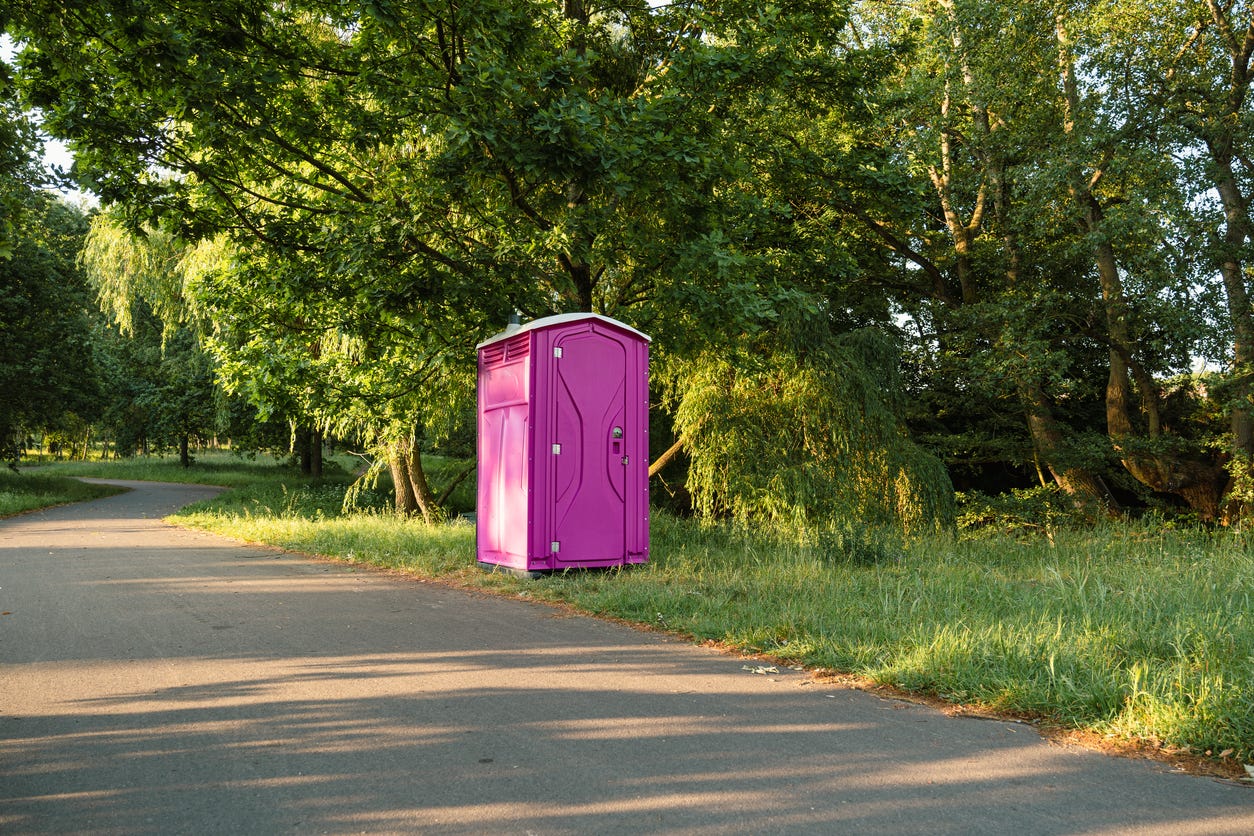
A few summers ago, I was six miles into a hot training run when my body abruptly alerted me that I needed to find a bathroom as soon as possible. Since it wasn’t a situation I could quickly address behind a tree, it seemed highly possible that this could be the fearful day that I pooped my running shorts on the Olentangy Bike Path. I held on as long as I could to the flimsy hope that if I kept running, maybe the urge would subside.
It didn’t.
I remember something resembling a desperate prayer forming — not really addressed to anyone, just pure, animal please, please, not here, not today — and morphing into a desperate chant as I did my best to keep things safely inside. A few minutes into my desperation, I turned a corner and saw it: a porta-potty, alone in a field, as if the sky had opened, and my prayer had been answered. I sprinted for it with relief and glee but didn’t want to waste a single second.
As soon as I was inside, though — completely safe and hidden, exactly like I’d begged to be a few minutes earlier — I hated it. It was unbearably hot and smelled aggressively foul, with evidence of careless visitors splashed on its plastic surfaces.
Is this really what an answer to prayer looks like these days?
That’s when it clicked. I’d gone from intensely grateful for getting precisely what I’d asked for, which had been highly unlikely. Everything I needed was there — privacy, a place to sit cautiously, toilet paper, hand sanitizer — but it had all arrived in a condition I immediately rejected. Everything inside me weighed in with a big, fat NO!
I quickly decided to try a different response. It wasn't about pretending to like the situation. It was more like getting that bodily NO to a YES — or even a shaky MAYBE. Maybe I could live here long enough to do what needs to be done.
Instead of trying to improve the moment, I just let myself notice what was actually available in it. I said to myself, If this is the lifeboat you were yearning for a minute ago, what if you didn’t act like it was somehow worse than being lost at sea?
I was reminded of a line from the mindfulness teacher Eric Harrison that I appreciate:
“‘Being ‘present’ is not just about smelling the roses. It is also about smelling the shit. Persuading people to sit still for a long time trains them to be more comfortable within their less-than-perfect, present moment experience as it occurs during the meditation.“2
I wasn’t trying to be more present by excluding the disgusting stew of sights, sounds, and sensations, but by including the stifling heat, filth, and foul smell. But I started to notice other things mingled with them. The palpable relief in my body. The pressure I’d been carrying for a mile, now completely gone. The sweat cooling me as it dripped dramatically from my skin. I didn’t force myself to accept the situation. I tried to make room for the variety of sensations inside a very small, unsavory chamber designed exactly for the kind of relief I needed.
The experience felt much shorter with less of a fight raging inside me. And what lingered afterward wasn’t the discomfort but the relief I felt when I was outside again, back on the running path. I laughed about my instinct to micromanage the details of my rescue. I felt the summer air moving across my skin, almost unbearably pleasant in a way ordinary air rarely feels — like how unbelievably delicious food can taste after some time not eating. The contrast made the ordinary summer air feel vivid. My willingness to lean into the uncomfortable moment had made the subsequent moments sharper, richer, and more satisfying.
I didn't become happier inside that porta-potty. I became more curious.
Summer is my hard season; I know people for whom it’s winter, or the dreary gray middle of March. There’s no time of year, no hour of a day, that’s universally pleasant for everyone.
Most of us, most of the time, have the tools to stay pretty comfortable — heat when it’s cold, air conditioning when it’s not, a screen to disappear into whenever the moment feels dull. There's nothing wrong with making ourselves comfortable, but if we're never willing to be a little uncomfortable, our senses slowly lose some of their sharpness. We can unintentionally blunt the very instrument — our senses — making us feel half-alive and calling it living.
As one saying puts it:
“We don’t rise to the level of our expectations, we fall to the level of our training.”
Noticing the air on your skin is a tiny, almost embarrassingly simple practice. It won’t feel urgent. That’s the point. It offers a low-stakes opportunity to practice the same willingness the porta‑potty demanded from me: relaxing your grip on the moment for a few seconds and meeting it as it is.
Exercise
Most of us notice air only when it's uncomfortable. This exercise helps you become sensitive to it even when nothing seems remarkable. You can do it while sitting, standing, or walking, and an oscillating fan could stir up some surprisingly interesting sensations.
Circumstances for learning this attention exercise
Too hot
Too cold
Just right
Moving from cooler environments to warmer ones
Moving from warmer environments to cooler ones
